
Trends
Salmon DNA Skincare (PDRN): What's Real, What's Hype, and What Works in the Philippines
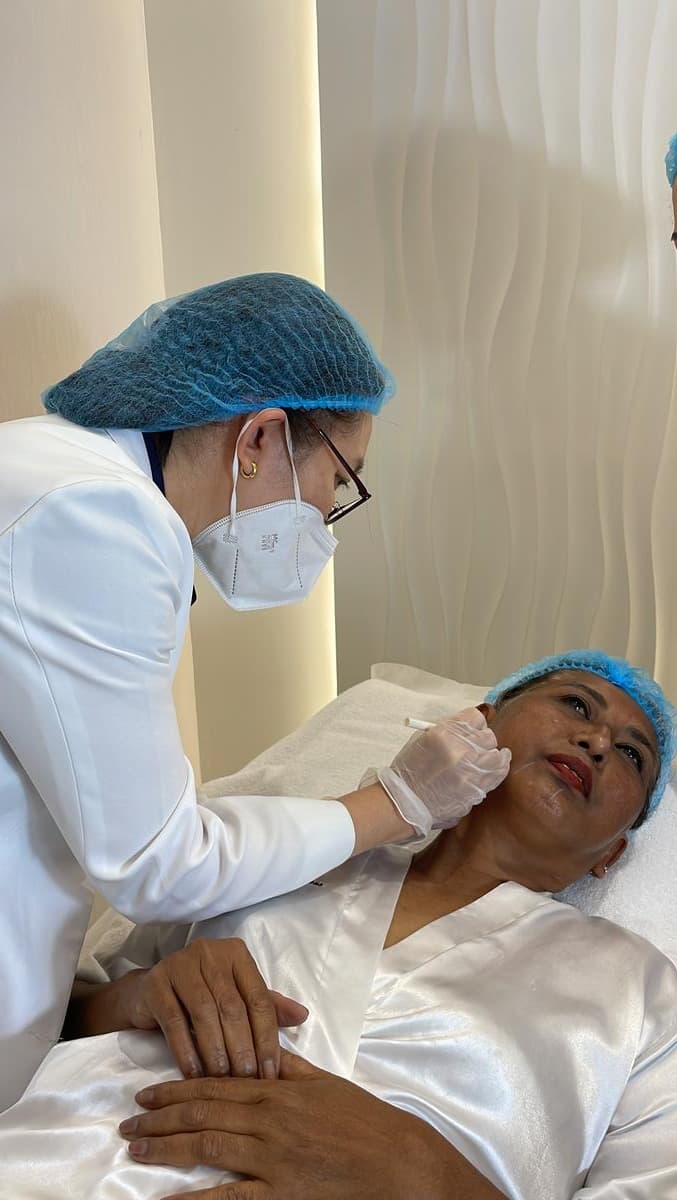
From celebrity-backed Rejuran events to viral PDRN serums, salmon DNA is 2026's biggest skincare trend in the Philippines. Here's an honest look at what it actually does, what's exaggerated, and the regenerative options that genuinely work.
If your feed looks anything like ours, you've seen it: "salmon DNA" serums in every TikTok haul, PDRN ampoules from Korea selling out, and celebrity-studded launch events in Manila — Agot Isidro and Angel Aquino recently fronted one for Rejuran, the best-known polynucleotide brand, talking about wanting to look like themselves, only fresher.
It's 2026's loudest skincare trend in the Philippines. So let's do what we always do with a trend: separate what's real, what's exaggerated, and what you should actually do about it.
What PDRN actually is
PDRN stands for polydeoxyribonucleotide — fragments of DNA, typically purified from salmon, whose genetic structure happens to be remarkably compatible with human skin. In clinics, it's delivered as a series of micro-injections; the best-known branded version is Rejuran, nicknamed "the healer" in Korea, where it's been mainstream for years.
The idea isn't to fill or freeze anything. PDRN belongs to the newer "regenerative" school of aesthetics: instead of adding volume or relaxing muscles, it aims to nudge your skin's own repair machinery — supporting cell turnover, hydration, and collagen production so skin gradually behaves like a younger version of itself.
That philosophy — repair over transformation, "better skin" over "different face" — is exactly why it's resonating now. After years of overfilled looks, the pendulum has swung hard toward results nobody can point at.
What the science supports
Here's the honest picture. Published studies on injectable polynucleotides show genuine, measurable improvements in skin hydration, elasticity, and fine texture over a course of treatments — typically three to four sessions spaced a few weeks apart. Research has reported increases in skin density, and dermatologists generally consider the safety profile good, with side effects usually limited to temporary redness and bumps at injection points.
What the science does not support is the miracle framing. PDRN won't lift sagging skin the way ultrasound or surgery can, won't erase deep lines, and won't transform anything in one session. It's a skin-quality treatment: think "glowier, bouncier, finer-textured," not "facelift."
What's exaggerated
Three claims deserve a reality check:
"The serum gives you the clinic result." It doesn't. DNA fragments are large molecules, and intact skin is designed to keep large molecules out. A topical PDRN product can be a pleasant, hydrating supporting act — but the before-and-afters fueling this trend come from in-clinic injectable treatments. If a ₱900 serum promised the same thing as a clinical procedure, the procedure wouldn't exist.
"It works for everyone." Results vary — genuinely. PDRN tends to shine on dull, dehydrated, early-aging, or post-acne skin. If your main concern is significant sagging or deep-set wrinkles, a skin-quality booster is the wrong tool, and a clinic being honest with you will say so.
"It's basically natural, so there's nothing to consider." It's still an injectable medical treatment. Pregnancy, active skin infections, and fish allergies are real contraindications, and technique matters — this belongs in trained hands, not a promo-priced assembly line.
The regenerative menu: where PDRN fits
PDRN is one option in a family of skin-quality treatments, and it helps to see them side by side:
| PDRN (e.g. Rejuran) | Profhilo | Collagen-stimulating facials | |
|---|---|---|---|
| What it delivers | Salmon DNA fragments | High-concentration hyaluronic acid | Light/RF energy + actives |
| Main effect | Repair, texture, hydration | Deep hydration, firmness, glow | Gradual collagen support |
| Sessions | 3–4, then maintenance | 2, a month apart | Course of sessions |
| Downtime | Minor bumps/redness, ~1–2 days | Minimal | None |
| Best for | Dull, post-acne, early-aging skin | Crepey, dehydrated, "tired" skin | Maintenance & prevention |
At SOI, our regenerative line-up today centres on Profhilo — which addresses many of the same concerns as PDRN through deep hydration and collagen-elastin stimulation — alongside collagen treatments for gradual skin-quality support, and 12D HIFU when the actual concern is lifting rather than skin texture.
The regenerative trend is real, and PDRN is a legitimate treatment with decent evidence behind it — for the right concern. It's worth considering if your issue is dull, tired, post-acne, or early-aging skin and you want subtle, cumulative improvement. It is not the right tool for significant sagging or deep wrinkles, and no cream version will replicate clinic results. If you're unsure which camp you're in, that's exactly what a consultation is for — and if a treatment we don't offer is genuinely your best option, we'll tell you that.
The bottom line
"Salmon DNA" is having its moment because it represents something bigger: Filipino beauty culture shifting from dramatic transformation to skin health and longevity. That shift is worth embracing. Just bring the same honesty to it that the trend's best advocates do — know what the treatment can and can't do, skip the miracle serums, and choose the regenerative option that matches your skin, not the algorithm's.
Talk it through in BGC or Quezon City
Curious whether a skin-quality treatment like Profhilo — or something else entirely — fits your skin? Our specialists will assess your concerns honestly, with zero pressure. We're in **BGC, Tagu
Treatments mentioned